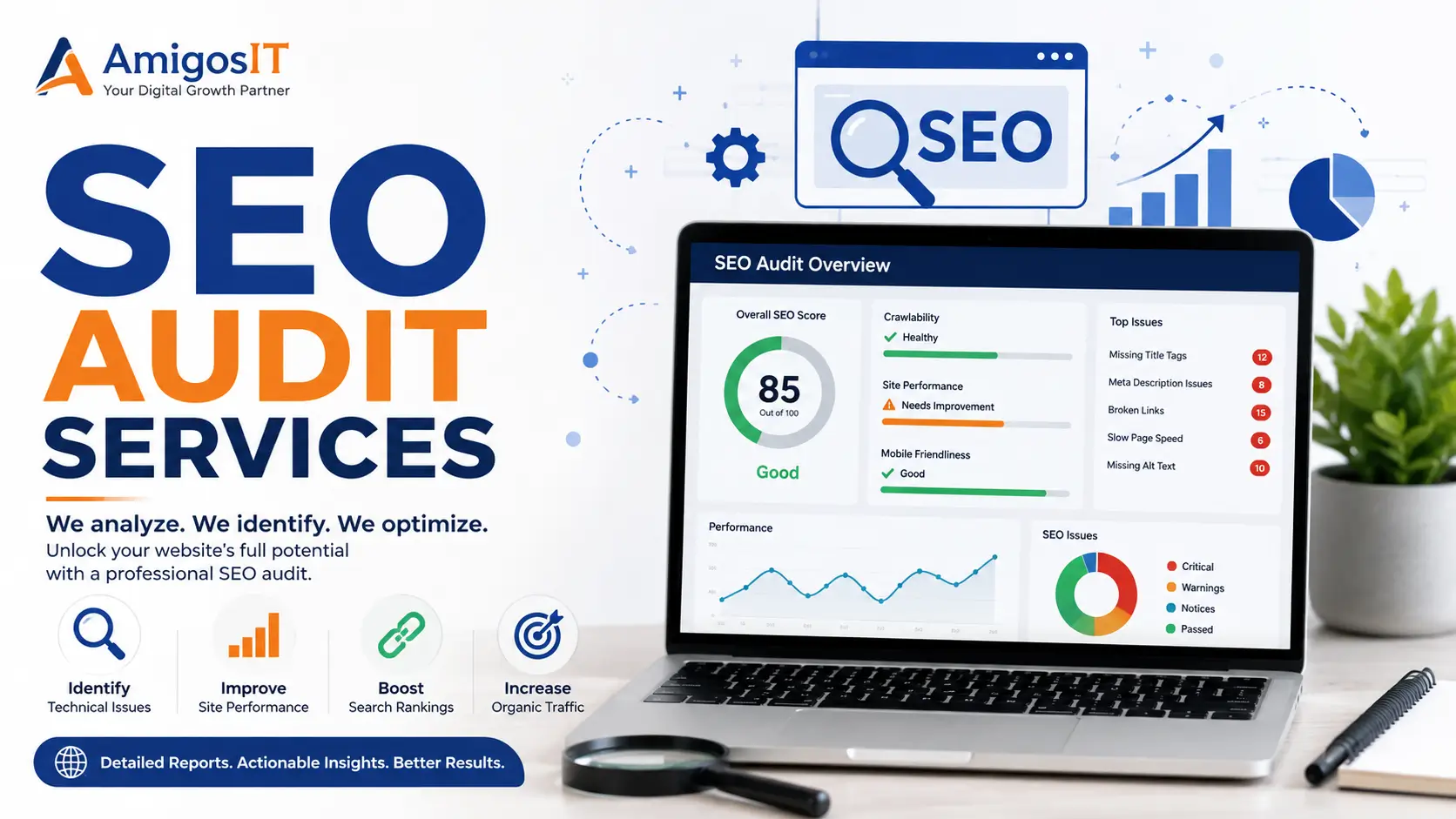
Your traffic used to grow every month. Now it’s flat, or worse, sliding backward. AmigosIT SEO audit services exist for exactly this moment, when something is quietly working against you, and you can’t see it from the surface. An audit digs through your site’s code, content, and backlink profile to identify the specific reasons Google isn’t rewarding you as it used to. It is not guesswork. It is a structured review that turns “something feels off” into a list of fixable problems, ranked by how much each one is likely costing you.
You might be wondering how a single audit can matter this much. Search engines evaluate hundreds of factors, and a weak spot in even one area, such as slow page speed or duplicate content, can drag down otherwise strong pages. It helps to know that most sites lose far more traffic to small, compounding issues than to one dramatic mistake. A proper audit catches those small issues before they add up.
Think about the last time you searched for a service online and clicked past the first result because it looked outdated or loaded slowly. Your customers do the same thing to you. An audit is how you find out where that’s happening on your own site.
An audit also protects you from wasting money on the wrong fixes. Plenty of businesses throw budget at new content or paid ads when the real problem is a broken redirect chain or a handful of pages Google can’t even crawl. Knowing the actual cause changes where you spend next month’s budget, and that alone can save thousands over a year of guessing.
It also gives you a benchmark for the future. Once you’ve run one full audit, every follow-up review moves faster, because there’s already a baseline to compare against. You start noticing patterns, like which type of page tends to break first after a plugin update, or which category of content ages fastest and needs a refresh sooner than the rest.
Do You Need an Agency, or Can You Run One In-House?
Smaller sites with a technically capable team member can sometimes handle a basic audit internally, using free tools like Google Search Console and PageSpeed Insights. The gap usually shows up in interpretation. Knowing a page is slow is easy. Knowing exactly which script is causing it and whether fixing it is worth the engineering hours requires more specialized experience.
Larger or more complex sites almost always benefit from outside eyes. An internal team stares at the same site every day and tends to miss issues that someone coming in fresh catches within the first hour.
What Do You Actually Receive at the End?
A report full of jargon nobody on your team can act on isn’t worth much. A useful audit hands you a prioritized list, ranked by impact and effort, so you know exactly what to tackle first. It should read more like a to-do list than a textbook.
We typically break findings into three tiers. Critical issues block indexing or crawling outright and get fixed first. Moderate issues slow growth but don’t stop it, things like thin content or slow-loading images. Minor issues round out the list, worth fixing eventually but never urgent enough to delay the bigger wins.
A Sample Priority List
On a recent audit for a regional law firm, the top three items were a broken sitemap submission, six pages with duplicate title tags, and a missing SSL redirect on their old blog subdomain. None of those took more than a day to fix, yet together they were suppressing indexing across nearly a quarter of the site.
What Do SEO Audit Services Actually Cover?

A real audit looks at three layers of your website. The technical layer covers crawlability, indexing, site speed, and mobile usability. The content layer looks at keyword targeting, duplicate pages, and thin or outdated posts. The off-page layer reviews your backlink profile and checks for toxic links dragging down your domain authority.
It helps to know these layers interact with each other. A fast, well-coded site with weak content still won’t rank. Strong content on a slow, broken site won’t rank either. You need all three working together, and an audit shows you exactly where the weak link is.
Technical Health Checks
This part of the audit looks at your XML sitemap, robots.txt file, page load times, and any crawl errors flagged in Google Search Console. It also checks whether your site renders properly on mobile devices, since most searches now happen on a phone.
Content and Keyword Review
Here, the audit maps your existing pages against the keywords you actually want to rank for. You may find pages competing against each other for the same term, or gaps where a competitor ranks and you don’t. Closing those gaps is often the fastest win available.
Do You Need Both a Technical and a Content Audit?
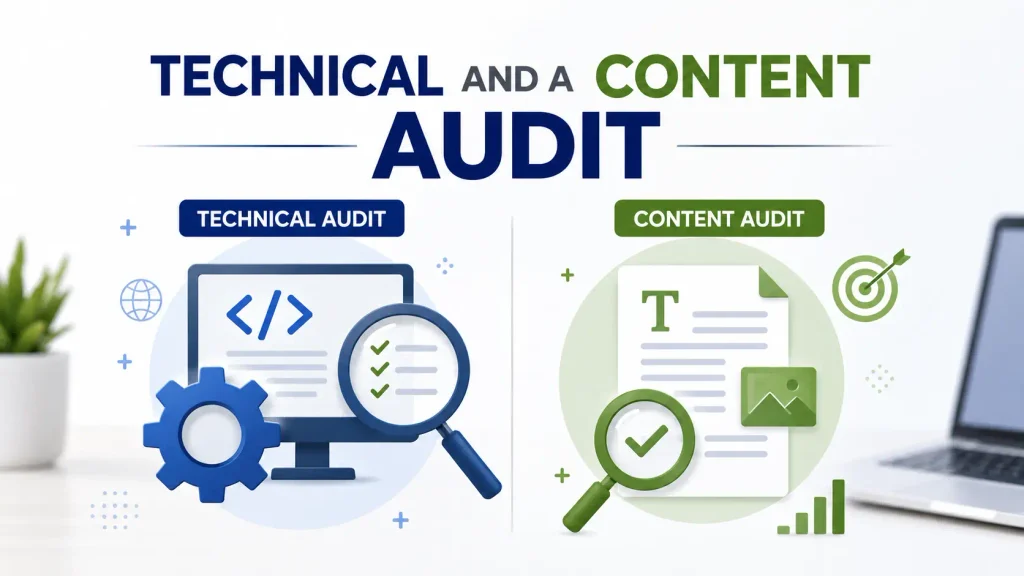
Ideally, yes, since the two answer different questions. A technical audit tells you whether Google can crawl and render your pages correctly. A content audit tells you whether the pages themselves are worth ranking in the first place, based on depth, accuracy, and how well they match what searchers actually want.
Businesses sometimes fix one and skip the other, then wonder why traffic hasn’t moved. A perfectly crawlable site full of thin, outdated pages still won’t outrank a competitor with genuinely useful content. Both layers need attention, even if they’re tackled in separate phases to manage cost.
Signs You’re Overdue for an Audit
A few warning signs tend to show up before rankings drop off a cliff. Watch for these:
- Organic traffic has stalled for three months or longer, even though you’re still publishing content
- Pages that used to rank on page one have quietly slipped to page two or three
- Your bounce rate has climbed, and nobody on the team can explain why
- A recent site redesign or migration happened without a matching SEO plan
- You’ve never had a formal audit done, even though the site is years old
How Often Should You Run One?
Most growing businesses benefit from a full audit once or twice a year, with lighter monthly check-ins in between. A restaurant chain we reviewed last year had gone four years without a single audit. Once we cleaned up broken internal links and fixed a duplicate content issue across their location pages, their local visibility improved within weeks. That’s a fairly typical outcome once the obvious clutter gets cleared.
A software company is a different story. Their site was technically clean, but their content hadn’t been updated to match how buyers were actually searching. The fix there was almost entirely about keyword realignment, not code. Every audit tells a slightly different story, which is exactly why guessing rarely works.
What Happens After the Audit?
An audit without a follow-up plan is just a document nobody reads. The real value comes from prioritizing the findings, fixing the highest-impact issues first, and tracking whether rankings and traffic respond. The point is, the audit is the start of the work, not the end.
According to guidance from Google’s own Search Central documentation, sites that consistently address technical and content issues tend to see steadier, more durable ranking improvements than sites chasing quick tricks.
You don’t have to guess why your rankings stalled. At Amigos IT Systems, auditing is where every project starts, never where it ends. Contact us, and we’ll walk your site through a full audit, then hand you a plan you can actually act on.