
On-Page SEO Services in the USA
Pages indexed but stuck on page two or three? Our on-page SEO services help U.S. businesses optimize titles, content, headings, and internal links so every page clearly matches what customers search for.
On-Page SEO That Makes Every Page Easy to Rank
On-page SEO is everything you control on the page itself: the words, the structure, the titles, the images, and the links between your pages. When it’s done well, Google understands exactly what each page is about and who it’s for. When it’s done poorly, even great businesses get buried behind competitors with clearer pages.
Amigos IT Systems provides on-page SEO services for businesses across the USA. We research the right keyword for every page, rewrite and restructure content around search intent, and fix the technical details that hold good pages back.
Our Core Services Include
- Keyword Mapping: one clear primary keyword for every important page.
- Title Tags and Meta Descriptions: written to rank and earn clicks.
- Content Optimization: helpful, intent-matched content with clear headings.
- Internal Linking: connecting related pages to share authority.
- Schema and Image SEO: structured data and optimized images.
On-page SEO is often the fastest way to improve rankings for pages that are already indexed. Small, precise changes to titles, headings, and content can move pages from page two to page one.
Is Your Website Facing These On-Page SEO Problems?
"Our Pages Rank on Page Two and Never Move Up"
Pages stuck just outside the top results are often close to ranking but missing key relevance signals. We compare them with top-ranking pages and fill the gaps in content, structure, and intent.
"Several Pages Compete for the Same Keyword"
Keyword cannibalization happens when multiple pages target the same search, splitting relevance. We consolidate or refocus pages so each one owns a clear topic.
"Our Titles Don't Get Clicks"
Low click-through rates from search results usually mean vague or truncated titles and descriptions. We write compelling metadata that includes the keyword and a reason to click.
"Our Content Is Thin"
Short pages that don't answer customer questions struggle to rank. We expand content with useful details, FAQs, and examples that match what searchers want.
"Google Rewrites Our Titles"
Google often replaces titles that don't match the page content. We align titles, headings, and content so Google displays what you intend.
"Important Pages Are Buried"
Pages that are hard to reach through internal links get less authority. We improve navigation and contextual links to your key pages.
Our On-Page SEO Services
On-Page SEO Audit
We review every important page for keyword targeting, titles, headings, content quality, internal links, images, and schema.
Keyword Research and Mapping
We assign each page a primary keyword and supporting terms based on search intent, volume, and competition.
Title Tag Optimization
We write concise, keyword-focused titles that fit search results and stand out from competitors.
Meta Description Writing
We write descriptions that summarize the page and encourage searchers to click.
Header Structure
We organize H1, H2, and H3 headings so content is scannable and clearly structured for search engines.
Content Optimization
We improve depth, clarity, and relevance, adding missing subtopics, answers, and calls to action.
Internal Linking
We add contextual links between related pages and fix orphan pages with no internal links.
Image Optimization
We compress images and add descriptive file names and alt text for accessibility and image search.
Schema Markup
We add structured data for services, FAQs, local business, articles, and products where relevant.
Understanding Search Intent
Search intent is the reason behind a search. Someone typing "how to fix a leaky faucet" wants instructions, while "plumber near me" wants to hire someone. Google ranks pages that best match the intent, so a service page won't rank for a how-to search, and a blog post rarely ranks for a hiring search. We study the current top results for each keyword to understand what Google considers the best answer, then shape your page to match: the format, depth, and type of information searchers expect.
Our On-Page SEO Process
Page Inventory
We list your important pages and review their current performance.
Keyword Mapping
We assign one primary keyword and intent to each page.
Competitor Comparison
We study top-ranking pages to identify content and structure gaps.
Optimization
We update titles, headings, content, images, and schema.
Internal Links
We connect related pages and strengthen links to priority pages.
Measure
We track rankings, impressions, clicks, and conversions for every optimized page.
Why Choose Amigos IT Systems for On-Page SEO?
- Intent-first optimization: pages built around what searchers want.
- Real content improvements: not just keyword stuffing.
- WordPress and Elementor expertise: we make the changes directly.
- Measured results: before-and-after tracking for every page.
- Full SEO team: technical SEO, content, and links under one roof.
Signs Your Pages Need On-Page SEO
- Pages get impressions in Google Search Console but few clicks.
- Your main service pages rank between positions 8 and 30.
- Google shows different titles than the ones you wrote.
- Several blog posts target nearly the same topic.
- Your pages lack headings, FAQs, or clear calls to action.
- Images are large, unnamed, or missing alt text.
E-E-A-T: Experience, Expertise, Authoritativeness, and Trust
Google's quality guidelines emphasize experience, expertise, authoritativeness, and trustworthiness, especially for topics that affect people's health, money, or safety. On-page signals help demonstrate these qualities. We add author information where relevant, cite credible sources, showcase real project examples and photos, include licenses, certifications, and awards, display reviews and testimonials, and make contact details easy to find. These elements help both Google and visitors trust your pages.
Optimizing for Featured Snippets and AI Overviews
Featured snippets and AI-generated answers pull concise, well-structured information from pages. We format content to make it easy to extract: direct answers right below question-style headings, short definition paragraphs, numbered steps for processes, and comparison tables where helpful. FAQ sections with clear answers and FAQ schema also increase the chance your content is selected. Even when users don't click immediately, appearing in these answers builds brand visibility and trust.
Internal Linking Strategy
Internal links guide visitors and search engines through your site. They also pass authority from strong pages to pages that need support. We build topic clusters where a main service page links to related sub-service pages, blog posts, and FAQs, and those pages link back to the main page. We use descriptive anchor text that tells Google what the linked page is about, fix broken internal links, and add links from your highest-traffic pages to your most important conversion pages.
Common On-Page SEO Mistakes We Fix
Multiple H1 Tags
Pages with several H1 headings send mixed signals. Each page gets one clear H1.
Keyword Stuffing
Repeating a keyword unnaturally hurts readability and can hurt rankings. We write naturally.
Duplicate Titles and Descriptions
Identical metadata across pages makes it hard for Google to tell them apart.
No Calls to Action
Optimized pages should also convert. Every page gets a clear next step.
Who Benefits Most From On-Page SEO Services
On-Page SEO Services help almost any business that depends on Google for new customers, but they deliver the biggest gains in a few situations. Businesses in competitive local markets, where several companies fight for the same searches, see the clearest difference because small improvements can move them above rivals. Growing companies that have outgrown referrals and want a predictable source of leads benefit from the compounding nature of SEO. Businesses that rely heavily on paid ads can reduce their cost per lead as organic visibility increases. And companies that recently redesigned or moved their website often recover lost traffic faster with focused SEO support.
Whatever your situation, we start by understanding your goals, your customers, and your competition. That way, the work we do is tied to outcomes you care about, such as more calls, more form submissions, more booked appointments, or more online sales, rather than vanity metrics.
What You Can Expect in the First 90 Days
Month 1: Discovery and Quick Wins
We complete the audit, set up tracking, and fix high-impact issues that can improve visibility quickly, such as metadata, indexing problems, or profile errors.
Month 2: Core Optimization
We implement the main strategy, optimizing priority pages, improving structure, and building the signals that matter most for your goals.
Month 3: Growth and Refinement
We review early results, double down on what's working, and expand into new keywords, pages, or areas based on the data.
How We Report Results
Every month you receive a clear report written in plain English. It shows keyword ranking changes, organic traffic trends, Google Search Console impressions and clicks, conversions such as calls and form submissions, and a summary of the work completed. We also explain what we're planning next and why, so you always understand how your investment is being used and how it connects to business growth.
Combining On-Page SEO Services With Our Other Services
SEO works even better alongside our other services. Our web development team can build the pages and fixes your strategy needs without delays. Our Google Ads and Meta Ads specialists can generate leads while organic rankings grow, and the keyword data from ads helps us choose which pages to optimize. Our social media and graphic design teams create content and visuals that support your brand and earn attention. Having everything under one roof means faster execution and a consistent message across every channel.
On-Page SEO for Service and Location Pages
Service businesses depend on two page types more than any others: service pages and location pages. A strong service page explains the problem the customer is facing, how you solve it, what's included, typical pricing or factors that affect cost, why customers trust you, and how to get started. It includes FAQs that match real questions and a clear call to action near the top and bottom. A strong location page goes beyond swapping a city name. It mentions the neighborhoods you serve, local conditions that affect the service, local projects or reviews, and service-area details. We build and optimize both page types so they rank and convert.
Optimizing Existing Content vs. Creating New Pages
Many websites already have pages that are close to ranking. Improving them is often faster and more effective than publishing new content. We use Search Console data to find pages with high impressions but low clicks, pages ranking on page two, and older posts that have lost traffic. These pages get refreshed with updated information, better structure, stronger titles, and improved internal links. When we find valuable topics with no matching page, we plan new content to fill those gaps. This balanced approach gets quicker wins while building long-term growth.
Content Readability and User Experience
On-page SEO isn't only for search engines. Pages should be easy to scan and pleasant to read. We use short paragraphs, descriptive subheadings, bullet points for lists, clear calls to action, and supporting images that break up long text. Good readability keeps visitors engaged longer, reduces bounces back to search results, and helps more visitors take the next step, all of which support your SEO goals.
On-Page SEO Checklist
- One clear primary keyword per page, used naturally in the title, H1, and introduction.
- A unique, compelling title tag and meta description.
- Logical H2 and H3 structure covering related subtopics.
- Helpful content that fully answers the searcher's question.
- Descriptive internal links to and from related pages.
- Compressed images with descriptive alt text.
- Relevant schema markup such as FAQ, service, or local business.
- A clear call to action and easy contact options.
Why On-Page SEO Delivers Fast Wins
Unlike link building or new content campaigns, on-page improvements work with pages Google already knows about. When a page that ranks in positions 8 to 20 gets a sharper title, clearer structure, stronger content, and better internal links, it can move up within weeks. That's why on-page SEO is often the first step in our SEO engagements. It builds momentum quickly, shows measurable progress early, and makes every future link and piece of content more effective because the pages they support are already well optimized.
On-Page SEO Across Every Page Type
We optimize homepages, service pages, location pages, blog posts, product and category pages, and landing pages. Each type has a different purpose and search intent, so each gets its own optimization approach, from keyword choice and structure to calls to action, so every page on your site pulls its weight in search.
Get a Free On-Page SEO Review
Have pages stuck on page two? Request a free on-page SEO review and we'll show you exactly what's holding them back and how to fix it.
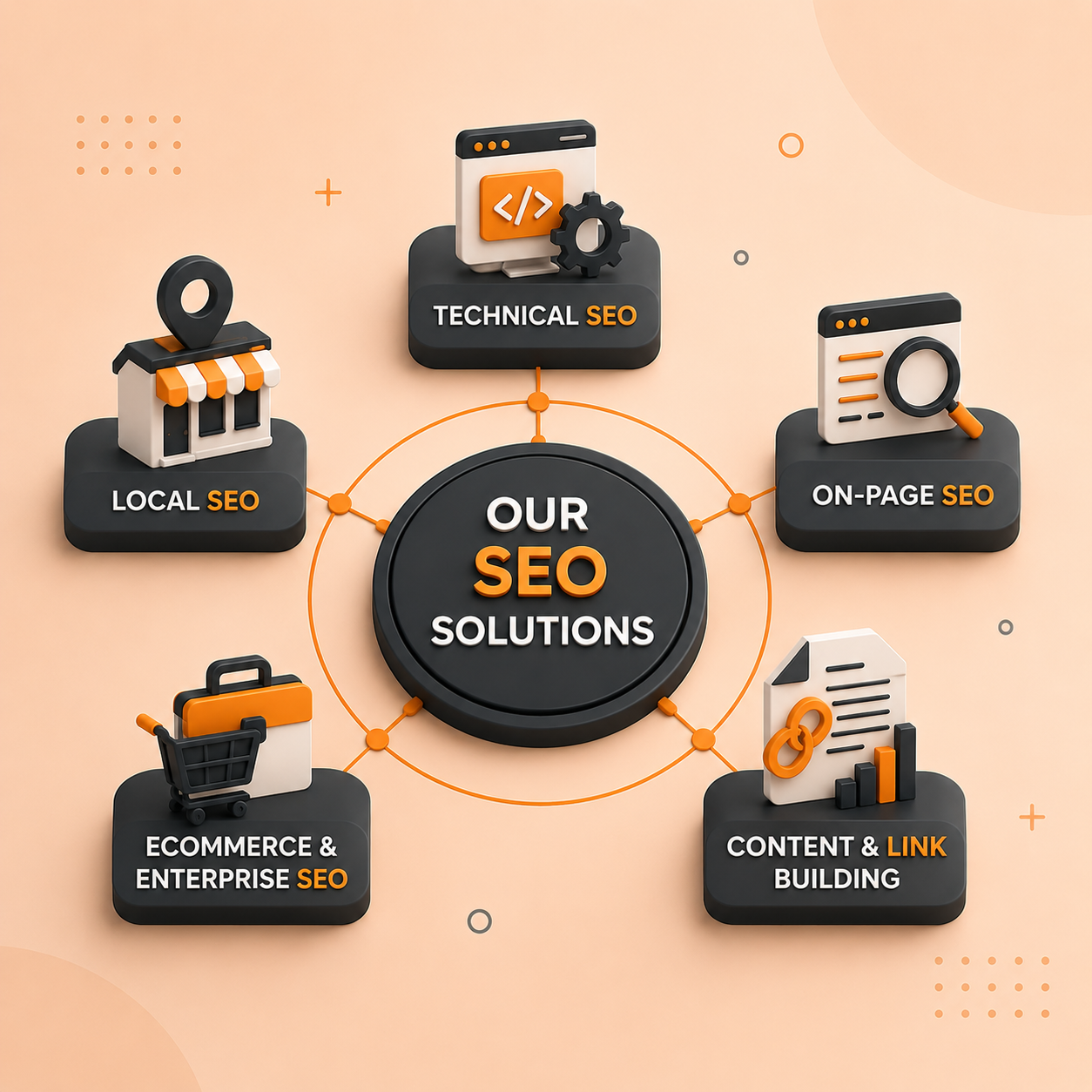
Get Your Free Audit →Our On-Page SEO Solutions
We align every page with search intent through keyword mapping, content optimization, metadata, internal links, and structured data.
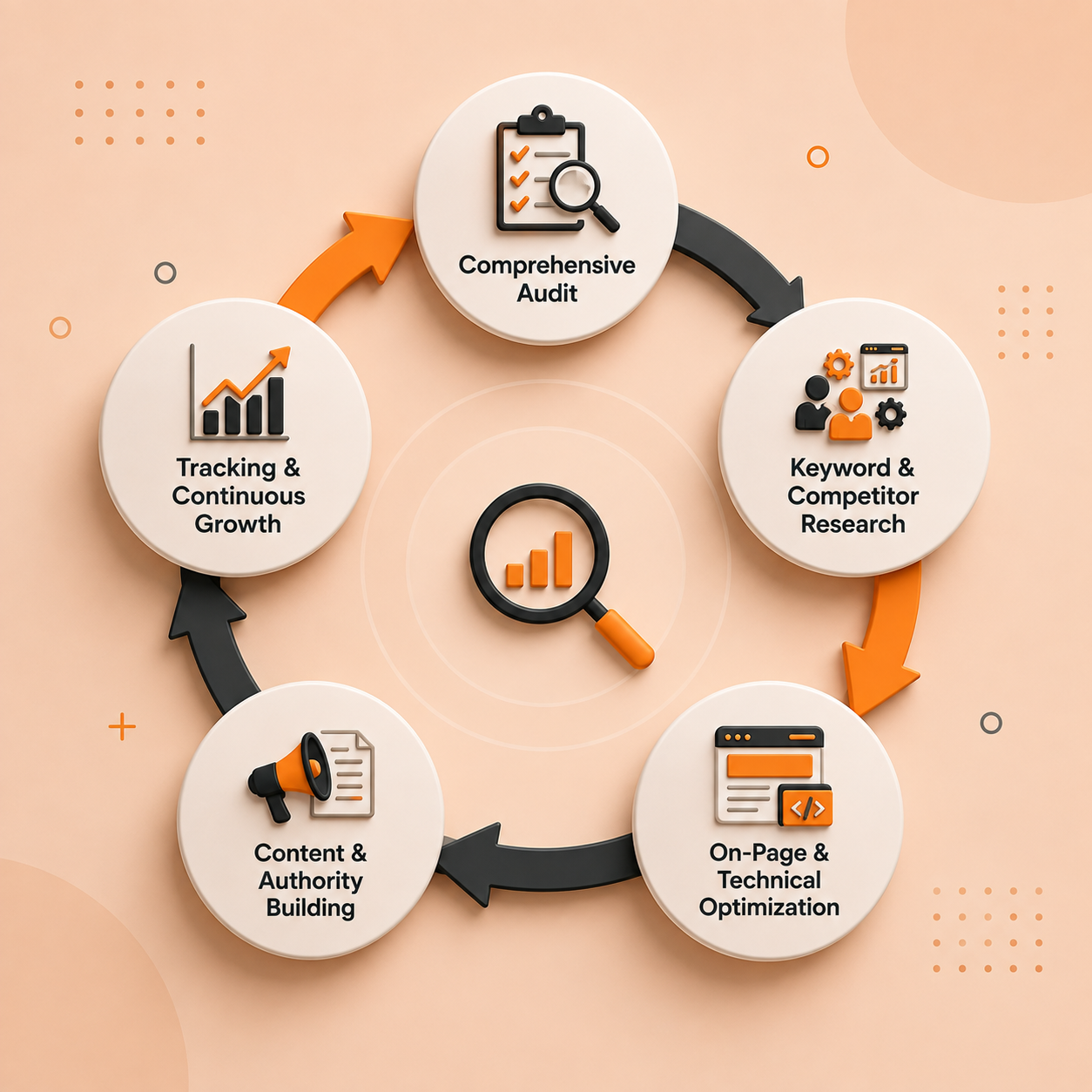
Our Proven On-Page SEO Process
We audit your pages, map keywords, optimize content and metadata, improve internal links, and measure ranking and traffic changes.
Our Faq
Get fast, clear answers to common questions about our SEO services and growth strategies.
What is on-page SEO?
On-page SEO is the practice of optimizing the content and HTML of individual pages, including titles, headings, content, images, internal links, and structured data, so they rank higher for relevant searches.
How is on-page SEO different from technical SEO?
On-page SEO focuses on the content and elements of each page. Technical SEO focuses on site-wide factors like crawling, indexing, speed, and site architecture. Both work together.
How long should a title tag be?
Aim for roughly 50 to 60 characters so it displays fully in search results. Include the main keyword near the beginning and make it compelling to click.
Do meta descriptions affect rankings?
Meta descriptions aren’t a direct ranking factor, but a strong description can improve click-through rate, which brings more traffic from the same ranking.
What is keyword cannibalization?
It happens when several pages target the same keyword and compete with each other. Consolidating or refocusing pages usually improves rankings.
How many keywords should a page target?
Each page should focus on one primary keyword and closely related variations. Trying to rank one page for unrelated topics weakens relevance.
Does word count matter for SEO?
There’s no ideal word count. Pages should be as long as needed to fully answer the searcher’s question. Competitive topics often need more depth.
How quickly does on-page SEO show results?
Changes to already-indexed pages can affect rankings within a few weeks, especially for pages close to the first page.
Do you rewrite my content?
Yes, where needed. We improve existing content and add new sections while keeping your brand voice and accuracy.
Can you optimize pages built with Elementor?
Yes. We work directly in WordPress and Elementor to update content, headings, metadata, and schema.
Our Testimonials
No hidden fees or vanity metrics. You get direct access to campaign analytics, clear progress tracking, and best results.
- Contact us
Partner With Us For Real Growth
Ready to transform your online presence? Whether you need custom web development, brand-focused graphic design, or a high-impact local SEO strategy, our team is here to help you scale. Reach out today to discuss your project goals and receive a personalized growth plan tailored to your business.
Address:
3811 Ditmars Blvd# 1124, Astoria, NY 11105
Website:
www.amigositsystems.com