Search “plumber near me” and the first thing you see isn’t a website. It’s a map with three businesses stacked underneath it. That’s the map pack, and for local companies it’s some of the most valuable real estate on the internet. Understanding Google Maps Ranking Factors is essential for businesses that want to appear in these top results. Getting there takes more than a nice listing, which is why a capable digital marketing agency spends so much time on local visibility. Here’s how Google actually decides who earns a spot, and what you can do about each factor.
What Is the Google Maps Ranking Factors Pack?
The map pack is the group of three local business listings that appear with a map for searches with local intent, like “coffee shop open now” or “family dentist in Astoria.” Each listing shows reviews, hours, and quick buttons for calling or getting directions. Because it sits above most organic results, it grabs a huge share of clicks. Searchers rarely scroll past it when they need something nearby, so being absent means being invisible to the people most ready to buy.
The Three Core Factors: Relevance, Distance, and Prominence
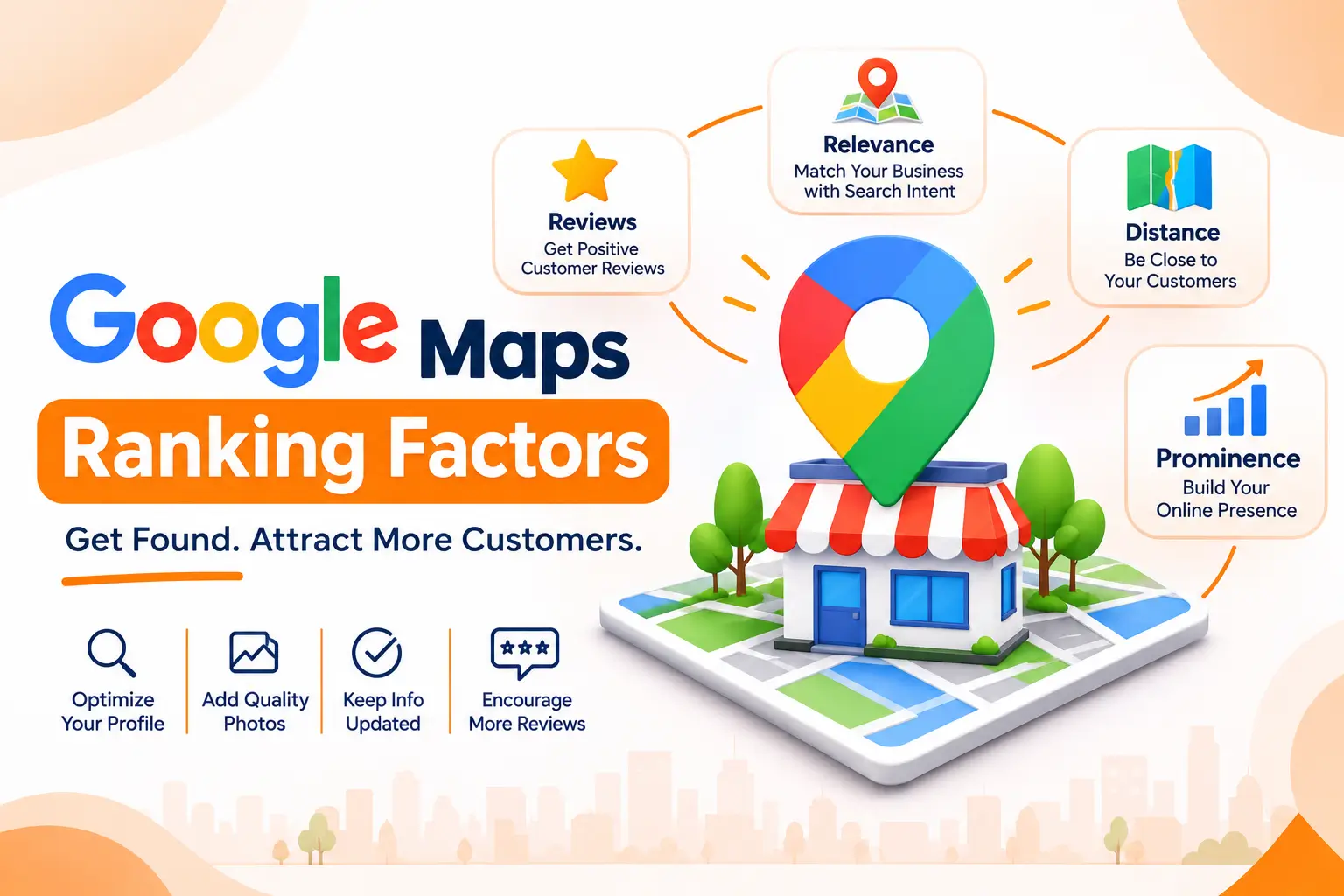
Google says local results are based mainly on relevance, distance, and prominence. Relevance is how well your listing matches what someone searched. Distance is how far you are from the searcher, or from the location they typed. Prominence is how well known and trusted your business appears, drawn from reviews, links, and mentions across the web. You can’t change distance, so most of the work goes into the other two. Everything below feeds one of these three.
Optimize Your Google Business Profile Completely
Your Google Business Profile is the foundation. Claim it, verify it, and fill in every field you can: hours, phone number, website, services, products, attributes, and a clear description written for humans. Incomplete profiles look careless to both Google and customers. Keep holiday hours current, because nothing sours a review faster than someone arriving at a locked door. Check the profile monthly, since customers and Google both suggest edits that can quietly change your details.
Choose the Right Primary Category
Category selection is one of the strongest relevance signals. Your primary category should describe your core business as specifically as possible. “Personal injury attorney” beats a broad “lawyer” if that’s what you do. Then add secondary categories for real services you offer, not wishful ones. Look at the top-ranking competitors in your area and see what they’ve picked. Their choices are worth studying, though you shouldn’t copy anything that doesn’t honestly describe your work.
Reviews: Quantity, Quality, Recency, and Replies
Reviews influence both rankings and the decision to click. A steady flow of recent, detailed reviews tells Google and customers you’re active and trusted. Ask happy clients right after a job, when the experience is fresh, and send a direct review link to make it painless. Reply to every review, including the nasty ones, calmly and specifically. Keywords in reviews can help when customers mention the service naturally, but don’t script them. Never buy reviews or trade discounts for them, since fake feedback can get listings penalized or removed.
NAP Consistency and Local Citations
NAP means name, address, and phone number. Google cross-checks these details across directories, and conflicting information lowers confidence. One site lists “Suite 200,” another says “Suite 2,” a third has a number you stopped using in 2020. Fix the major directories and the ones specific to your industry first. Clean, accurate listings beat a massive pile of sloppy ones. Use your real business name exactly as it appears on your signage. Stuffing extra keywords into the name violates Google’s guidelines and invites suspension.
Make Your Website Support Your Listing
Your site tells Google what you do and where you do it. Create a dedicated page for each core service and each area you serve, with genuine local detail rather than a swapped-out city name. Put your address, phone number, and an embedded map on the contact page, and add local business schema. Pages should load fast and work smoothly on phones, since most map searches happen on mobile. Solid website development makes all of this easier to execute. For a quick starting point, see these local SEO tips for small businesses.
Earn Local Links and Mentions
Prominence grows when other credible sites reference you. Sponsor a youth team, join the chamber of commerce, get featured in local news, or partner with nearby businesses that can link to you. These links carry more weight for local searches than random directory submissions. Real community involvement does double duty, since it builds reputation offline too. A single link from a respected local publication can matter more than twenty from low-quality sites that nobody visits.
Engagement, Photos, and Posts
Google can see how people interact with your listing: clicks, calls, direction requests, and website visits. You can’t fake those, but you can encourage them with strong photos, clear services, accurate hours, and working booking links. Upload real images of your storefront, team, and finished work, and add new ones regularly. Posts about offers, events, or updates keep the profile fresh.
Use Social Media and Content to Back It Up
Social profiles don’t directly lift map rankings, but they build the familiarity that leads to branded searches and clicks. Share job photos, customer stories, and community moments. Consistent social media marketing also gives you content you can reuse on your site and profile. People who recognize your name are more likely to choose you when they see you in the pack.
Mistakes That Hurt Your Map Rankings
Several habits cause real damage. Using a virtual office or a mailbox as your address can get a listing suspended. Creating duplicate listings splits your reviews and confuses Google. Keyword-stuffing the business name, ignoring reviews, and leaving old phone numbers in directories all drag results down. Another common one: setting a huge service area you can’t realistically cover. Be honest about where you operate.
How to Track Your Progress
Rankings shift by location, so checking from your desk tells you little. Use a local rank tracking tool or a geo-grid report to see how you appear across your service area. Watch the Business Profile insights for calls, direction requests, and website clicks, and ask new customers how they found you. Expect gradual movement over a few months, sometimes faster in less competitive areas. If progress stalls, audit your categories, reviews, and citations first. The boring basics are usually where the problem hides.
Final Thoughts
Ranking in the map pack isn’t magic. It’s a mix of an accurate, active profile, trustworthy reviews, a helpful website, and consistent signals across the web. Do those well for several months and you’ll usually see calls climb. Pair local work with broader SEO services for longer-lasting results. If you’d like an expert look at your listing, contact AmigosIT for a free consultation and get a clear plan for earning your spot.
Frequently Asked Questions
What are the main Google Maps ranking factors?
Google says local results are based on relevance, distance, and prominence. Relevance is how well your listing matches the search, distance is how close you are, and prominence is how well known and trusted you appear.
How long does it take to get into the map pack?
Most businesses see movement within a few months. Less competitive areas can move faster, while busy markets like law or healthcare often take longer.
Do reviews really affect map pack rankings?
Yes. Recent, detailed reviews and your replies to them help both rankings and clicks. Never buy reviews, since fake feedback can get a listing penalized.
Can I rank in the map pack without a website?
It’s possible, but harder. A website with service pages and your local details backs up your listing and gives Google more to trust.
Does posting on social media help my Google Maps ranking?
Not directly. It does build familiarity, which leads to more branded searches and clicks, and those engagement signals can help.