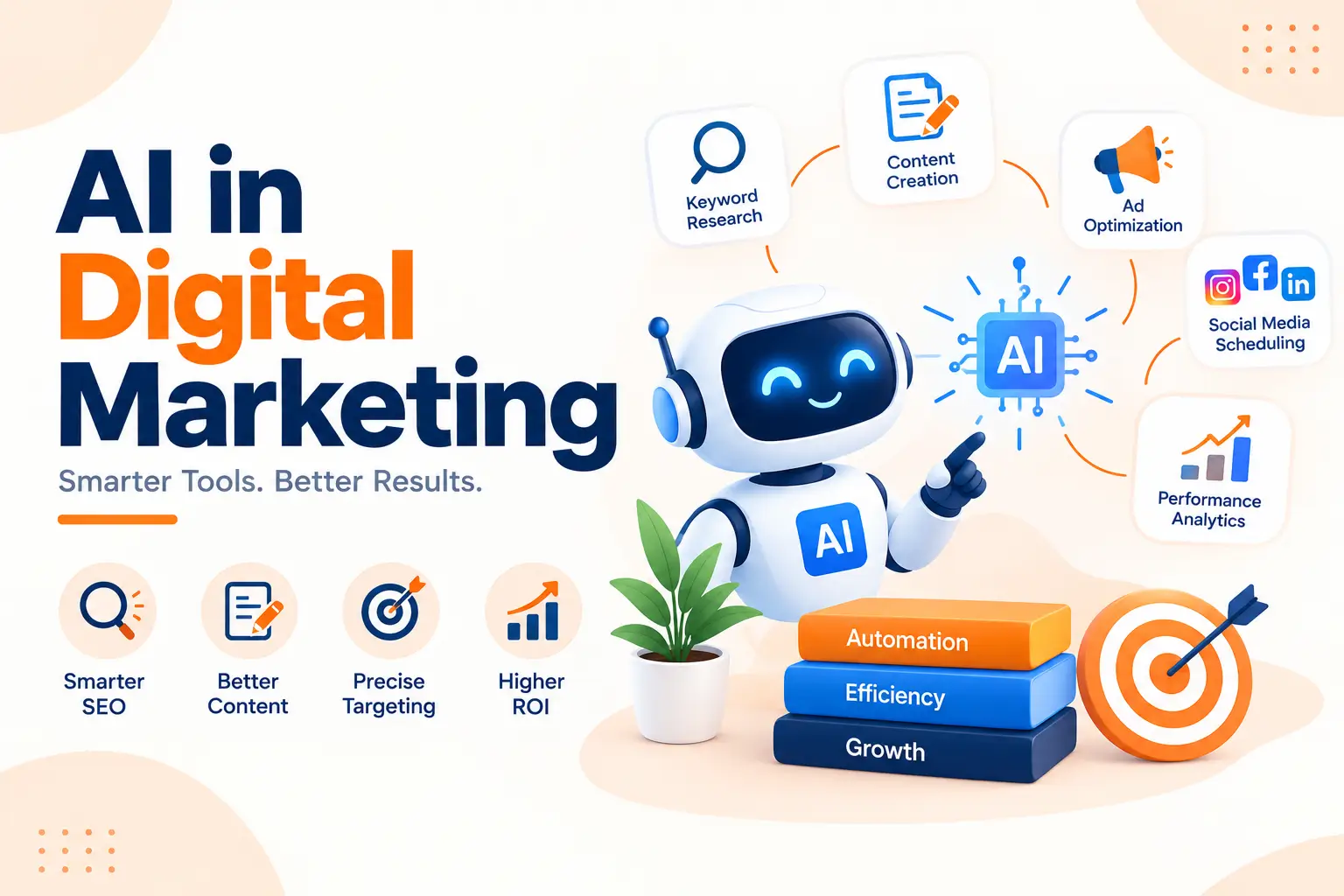
Picture a bakery owner in Lahore who spends four hours every Sunday writing Instagram captions. Four whole hours. That’s exactly the kind of job AI in digital marketing was built to shrink. At Amigos IT Systems, we’ve watched small businesses go from scared of AI to quietly depending on it, and honestly, the shift happened faster than most of us expected. This guide keeps things simple. No jargon, no hype.
What AI in Digital Marketing Really Means
Forget robots. In plain words, AI is software that learns from data and then helps you make faster choices. It reads patterns in clicks, searches, and sales, then suggests what to do next. Maybe that’s which customers to email. Maybe it’s what time to post, or which ad headline will probably win. According to McKinsey’s State of AI report, marketing and sales is one of the business areas where companies use AI the most. So this isn’t a future thing anymore. It’s already sitting inside tools you likely use, from Google Ads to Canva, whether you’ve noticed it or not.
How AI Is Changing SEO
Search is where the change feels biggest. Google now shows AI-written summaries at the top of many results, which means people sometimes get answers without clicking at all. Annoying? A bit. But it also rewards websites that answer questions clearly and honestly. AI tools can help you find keywords, group related topics, and spot gaps your competitors missed. They’re good at grunt work. They’re not good at knowing your customers in Faisalabad or Houston the way you do. Our SEO services mix both sides: AI for the heavy research, real people for strategy and the final words. That balance matters more than any single tool.
Smarter Websites That Learn From Visitors
Your website can now react to the person looking at it. A returning visitor might see different products than a first-timer. Chatbots answer simple questions at 2 a.m. while you’re asleep, and they’ve gotten surprisingly decent at it. AI can also test two versions of a landing page and tell you which one gets more calls. Still, none of this works on a slow, messy site. If pages take six seconds to load, no chatbot will save you. That’s why good website development comes first. Build a fast, clean base. Then layer the smart stuff on top.
AI for Social Media and Content
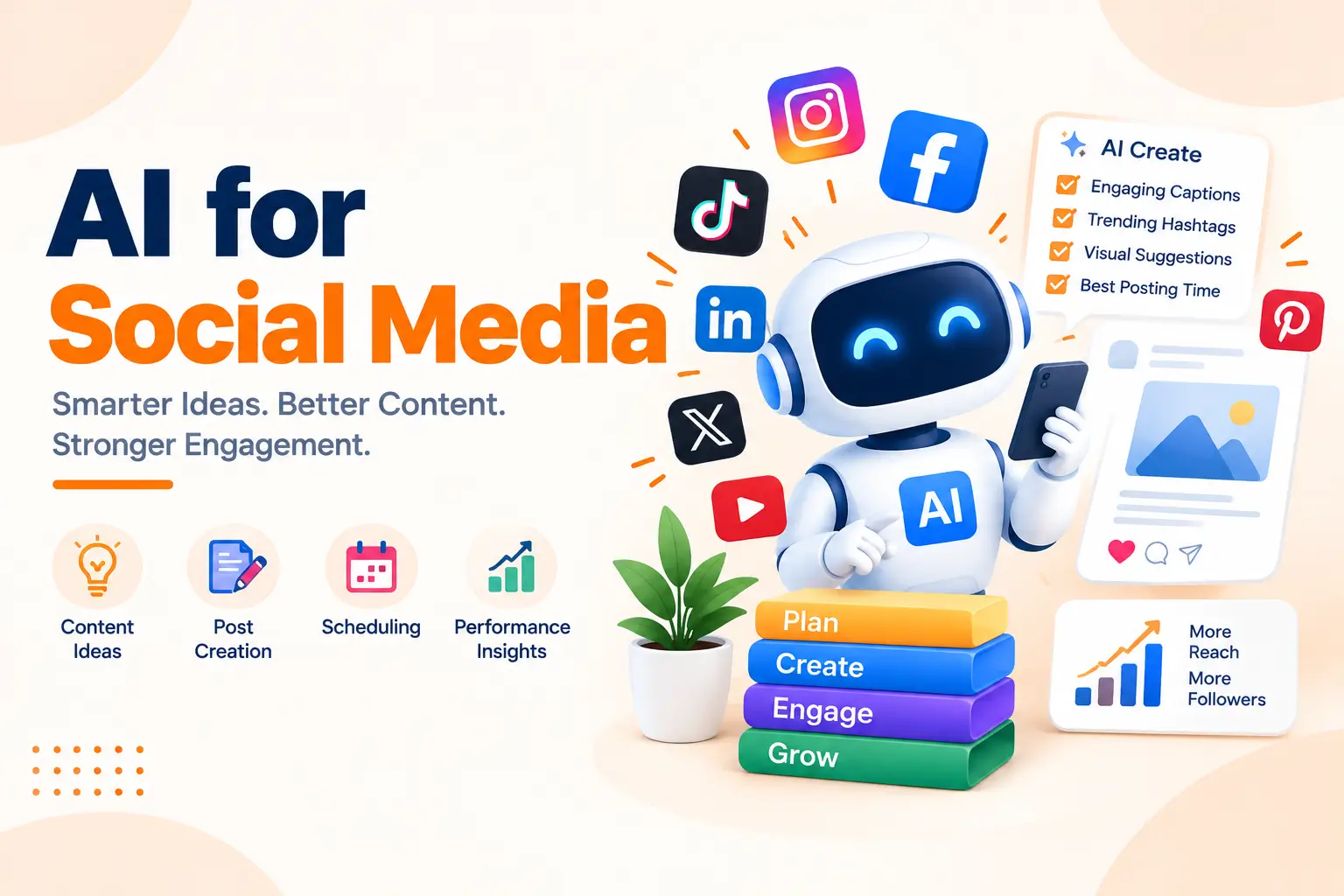
Social media eats time. AI gives some of it back. Tools can now draft captions, suggest hashtags, pick the best posting hour, and even reply to common comments. A small furniture shop could easily cut its weekly content planning from five hours to about ninety minutes. Not bad. But here’s my honest opinion: fully AI-written posts often sound flat, like a brochure nobody asked for. Use AI for the first draft and the scheduling, then add your own voice. Our social media marketing team works this way, and engagement is noticeably better when a human edits the final post.
AI in Graphic Design and Visuals
Image tools have exploded. You can type a sentence and get a product mockup in seconds. Background removal, resizing for every platform, quick color variations: all of it now takes a click. Great for speed. Risky for brand identity, though, because AI images can look generic, and customers notice more than you’d think. A logo or brand style should still come from a designer who understands your story. For banners, social posts, and ad creatives, a mix of AI speed and real graphic designing skill gives you visuals that look polished and actually feel like your business.
Personalized Email and Ads
Generic emails get ignored. AI fixes a lot of that by sorting customers into groups based on what they bought, opened, or skipped. Someone who browsed running shoes three times gets a shoe offer, not a newsletter about socks. Ad platforms like Meta and Google already use AI to find buyers who look like your best customers. You set a budget and a goal; the system tests audiences on its own. Just keep an eye on it. AI chases whatever goal you give it, so if you tell it “clicks” when you really want sales, it’ll happily burn money on cheap clicks.
Better Data and Faster Decisions
Most small businesses sit on data they never read. AI dashboards change that. They can flag a sudden drop in traffic, predict which months will be slow, or show which city sends you the most leads. You don’t need to be a numbers person. You just need to ask the right question and actually act on the answer. I’d say start with one report you check every Monday, nothing fancy, and build from there.
Mistakes to Avoid When Using AI
The biggest mistake? Copy-pasting AI content straight onto your site. Google cares about helpful, original content, and readers can smell lazy writing. Other common slip-ups include feeding customer data into random free tools, trusting AI facts without checking them, and buying five tools when one would do. AI also gets local details wrong a lot. Ask it about a small inland town and it might confidently describe the beach. There isn’t one. Always review before you publish.
Final Thoughts
AI won’t replace good marketing. It replaces boring tasks, and that frees you to focus on customers, offers, and ideas that only a human can come up with. Start small. Pick one area, maybe social captions or keyword research, and test an AI tool there for a month. If you’d like a team that already knows how to blend AI with real strategy, contact us and let’s talk about what fits your business.
Frequently Asked Questions
1. What is AI in digital marketing?
It’s the use of smart software to analyze data, create content, and automate tasks so marketing becomes faster and more targeted.
2. Can small businesses afford AI marketing tools?
Yes. Many tools have free or low-cost plans, and features are already built into platforms like Google Ads and Canva.
3. Will AI replace digital marketers?
No. AI handles repetitive work, but strategy, creativity, and understanding real customers still need experienced humans to guide the results.
4. Is AI-written content bad for SEO?
Not if it’s edited well. Google rewards helpful, original content, so always review, fact-check, and add your own experience.
5. Where should I start with AI marketing?
Start with one task, like social captions or keyword research, test a tool for a month, then expand slowly.