People decide whether to trust a brand within seconds of seeing it, often before they’ve read a single word. That snap judgment is almost entirely visual, which is exactly why serious digital marketing strategies treat design as a core function, not an afterthought tacked on at the end. This post walks through the eight types of graphic design that actually move the needle for businesses online, and why skipping any one of them tends to leave money on the table.
What Is Visual Design and Why Does It Matter?
Visual design is everything a customer sees before they read a single word, colors, layout, imagery, typography, all working together to shape a first impression. That impression forms fast, sometimes in under a second, and it’s remarkably hard to reverse once it’s set. A sloppy logo or a cluttered ad doesn’t just look unprofessional, it quietly signals that the business behind it might be careless in other ways too. Good design does the opposite. It builds trust before a single sentence gets read.
How Visual Content Supports Digital Marketing
Visual content carries weight that plain text simply can’t on its own. People process images far faster than words, and platforms like Instagram and Pinterest are built entirely around that fact. Well designed visuals also travel further, since a strong graphic gets shared and saved more than a wall of text ever will. Beyond that, consistent visuals across a website, social pages, and ads reinforce brand recognition every time someone sees them, even if they’re scrolling past without stopping to read anything at all.
8 Types of Graphic Design for Digital Marketing
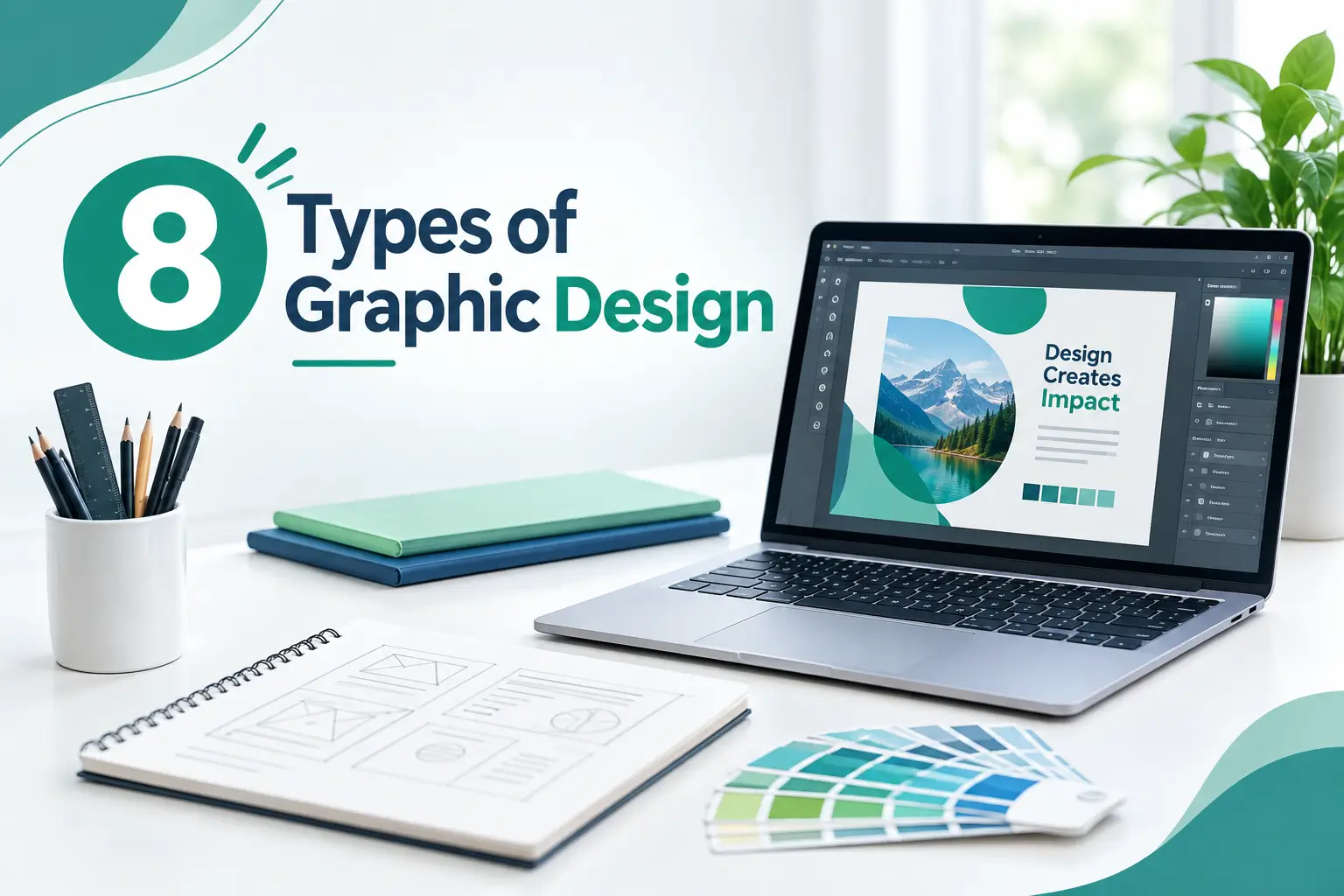
Most businesses lean on a handful of design categories without realizing how many distinct skills each one actually requires. Logos differ wildly from web layouts, and social graphics need a completely different approach than a printed ad or a data heavy infographic. Understanding these categories separately helps businesses invest where it actually counts instead of treating “design” as one vague, catch-all line item on an invoice. The eight that show up in almost every digital marketing plan worth running are:
- Logo and brand identity design
- Social media graphics
- Website and UI visuals
- Infographics
- Digital ads and banner creative
- Email marketing design
- Video and motion graphics
- Print and promotional materials
Not every business needs equal investment across all eight. A local service business might lean hardest on website visuals and social graphics, while an e-commerce brand often gets more mileage from ads and email design. The next few sections dig into the ones that matter most for online marketing specifically.
Social Media Content for Better Brand Engagement
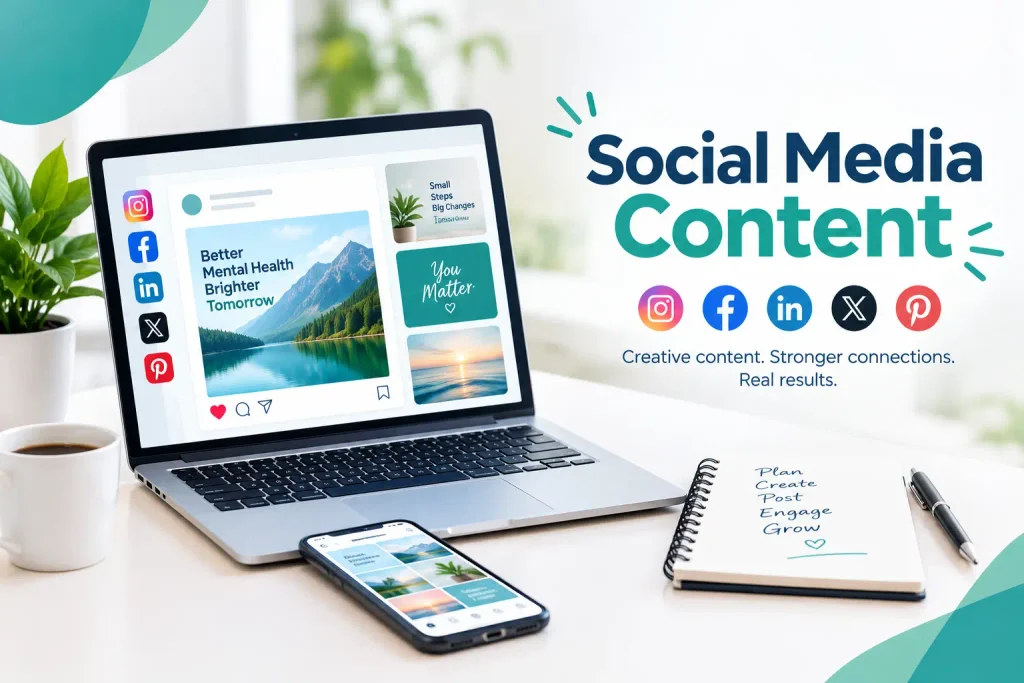
Social graphics need to work fast, since most people scroll past a post in under two seconds without a second thought. Bold colors, clear text, and a consistent visual style across posts help a brand register in someone’s memory even during a quick scroll. Templates keep this manageable at scale, though they need enough variation to avoid feeling repetitive after the twentieth post. Social media marketing leans heavily on this kind of design, since the content itself is often the entire pitch, no separate ad copy required.
Logo and Brand Identity for Business Recognition
A logo carries more weight than most business owners expect going in. It’s the single visual element that shows up everywhere, on invoices, business cards, the website, every social profile picture across every platform. A strong logo works in black and white just as well as color, and it holds up shrunk down to a tiny app icon without turning into a blurry mess. Brand identity goes further than the logo alone, covering color palettes, fonts, and tone that keep everything feeling like it came from the same place.
Website Visuals for Better User Experience
Visuals on a website do more than decorate the page, they guide someone through it. Icons clarify navigation without extra text. Product photos, when done well, answer questions before a customer even has to ask them out loud. A well designed website uses whitespace deliberately too, giving content room to breathe instead of cramming everything into view at once. Poor visual choices here, low quality images or inconsistent styling, quietly undercut trust even when the actual content underneath is genuinely solid.
Infographics for Clear and Engaging Information
Infographics turn dense information into something people actually want to look at, which matters a lot for topics that would otherwise read as dry or overly technical. A good infographic doesn’t just decorate data, it organizes it in a way that makes the takeaway obvious within seconds. These tend to get shared and linked to more than plain articles, partly because they’re easy to reference and partly because they just look better sitting inside someone else’s blog post. They work especially well for statistics, timelines, and step by step processes.
Digital Ads and Promotional Content for Campaigns
Ad design faces its own specific pressure, since it needs to grab attention in a feed full of competing content within a fraction of a second. Bold visuals, clear pricing or offers, and a strong call to action all need to fit into a small space without feeling cramped or chaotic. Different platforms demand different specs too. A design that looks great on Facebook can get cropped awkwardly on Instagram Stories if nobody accounted for the size difference ahead of time. Testing multiple ad creative variations usually reveals which visual style actually converts for a given audience.
How to Choose the Right Design Style for Your Business
Start with the audience, not personal preference. A style that appeals to a design-savvy younger crowd can feel completely out of place for a more traditional, older client base, and vice versa. Look at competitors too, not to copy them, but to understand what’s already saturating the space so the brand can stand apart instead of blending in. Consistency matters more than trend-chasing in the long run. A style that holds up for years beats one that needs a full overhaul every time a new trend shows up online.
Final Thoughts
Design isn’t decoration bolted onto a marketing plan after the real strategy is done, it’s part of the strategy itself. The businesses that invest in strong visuals across their logo, website, social content, and ads tend to build trust faster and hold attention longer than the ones treating design as an afterthought. If your current visuals feel outdated or inconsistent across platforms, reach out to AmigosIT for a free consultation and find out what a stronger visual identity could do for your brand.
Frequently Asked Questions
How much does professional graphic design cost?
Pricing varies widely by scope, but most businesses find a modest ongoing investment pays off through stronger engagement and recognition.
Do small businesses really need a full brand identity?
Yes, even a simple one. Consistent colors and fonts across platforms build recognition faster than most owners expect.
How often should social media graphics be refreshed?
Regularly enough to avoid feeling repetitive, often every few weeks, while keeping the same core brand elements throughout.
What’s the difference between a logo and brand identity?
A logo is one symbol. Brand identity includes the logo plus colors, fonts, and tone used consistently everywhere else.
Can good design really improve conversion rates? Absolutely. Clear visuals reduce confusion and build trust, both of which directly influence whether someone takes action.